🐍 Marine Life Center

Eels

Mysterious and misunderstood, eels are fascinating reef residents who peek from coral crevices and play a vital role in keeping the reef ecosystem in balance. Far more interesting than they look!

3Species Profiled
800+Eel Species
2 JawsMoray Unique Feature
Shy Reef Residents

Why eels are reef all-stars

Moray eels look intimidating — but that open-mouthed pose is simply how they breathe, pumping water across their gills. They are shy, mostly nocturnal hunters that control reef fish and crustacean populations. Some moray eels even cooperate with grouper fish on coordinated hunts, making them some of the most intelligent reef predators known to science.

âœĻ Did You Know?

Moray eels have two sets of jaws — a second pharyngeal jaw shoots forward to pull prey inward.

Garden eels live in large colonies, each buried in a separate sandy burrow, swaying with the current to catch plankton.

Ribbon eels change sex as they grow — born black and male, they turn blue, then brilliant yellow when female.

ðŸĶī
Skeleton
True Bones
ðŸū
Scales
Absent or tiny
ðŸĪ–
Moray Jaws
2 sets (unique)
🌙
Activity
Mostly Nocturnal
ðŸ”Ĩ
Breathe
Open-mouth pumping
ðŸĪ
Social
Some hunt cooperatively
Species Guide

3 eels of Tide Breaker Island

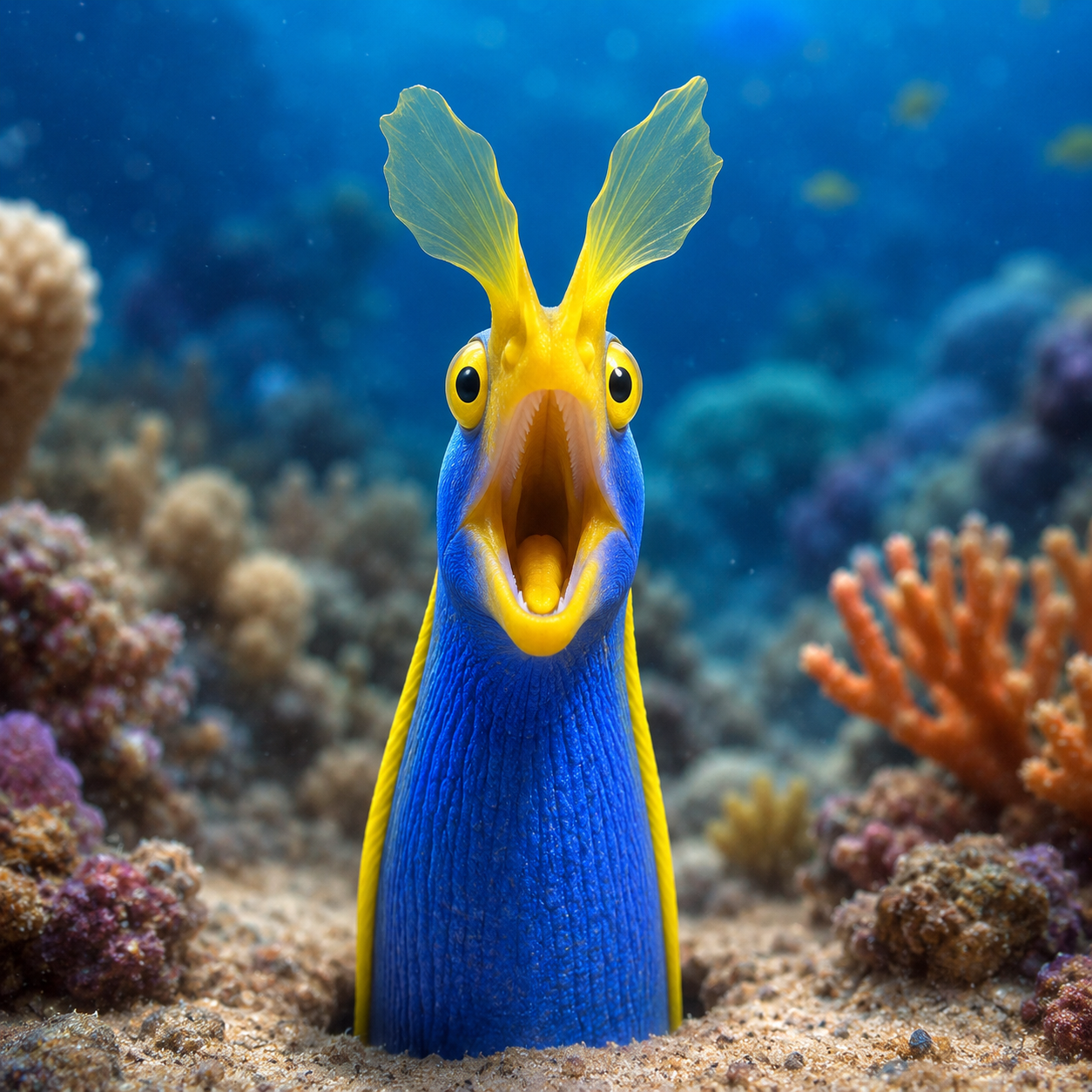
Blue Ribbon Moray Eel front view Blue Ribbon Moray Eel side profile
Eel

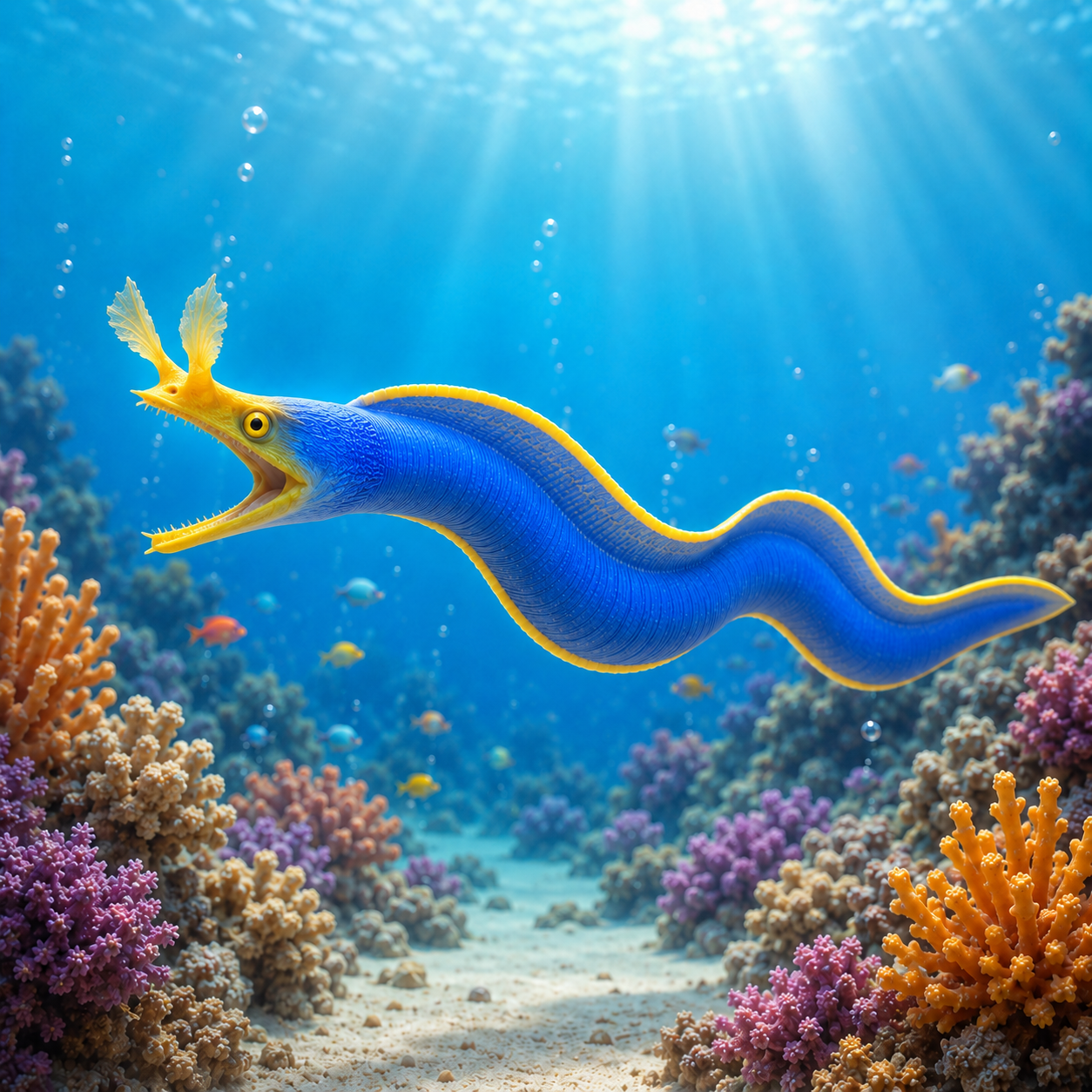
Blue Ribbon Moray Eel

  • One of the most visually stunning eels — vivid electric blue body with bright yellow snout, fin, and tail.
  • Born jet black and male, turns blue as it matures, then becomes bright yellow when it becomes female.
  • Has dramatic fan-like nostril extensions that give it a dragon-like appearance.
  • Lives in coral crevices in the Indo-Pacific, usually seen peering cautiously from the reef.
LengthUp to 1.3 m
HabitatCoral reef crevices
BehaviorSolitary, shy
StatusLeast Concern
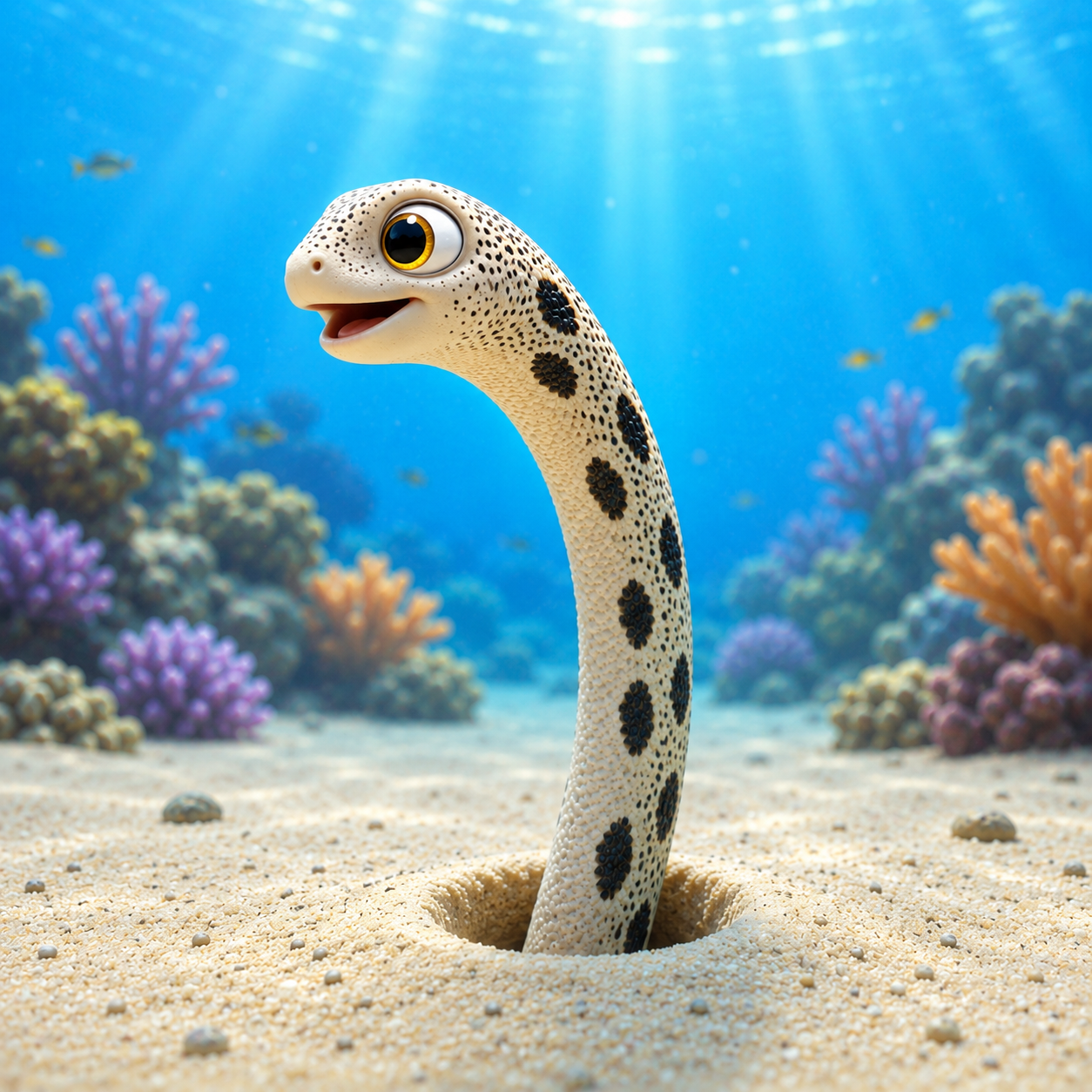
Garden Eel front view Garden Eel side profile
Eel

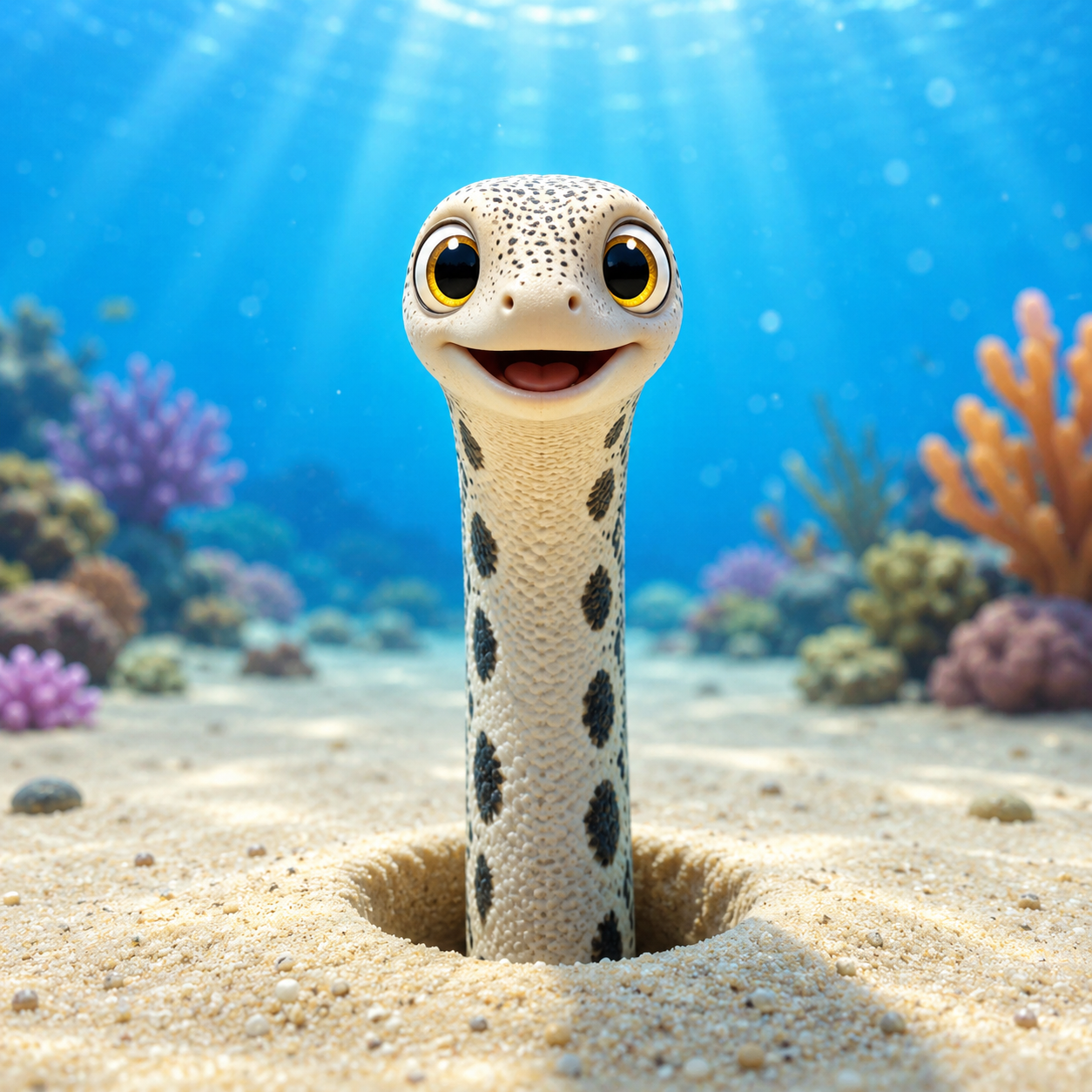
Garden Eel

  • Lives in large colonies of hundreds, each buried in its own sandy burrow.
  • Sways in the current like a living meadow of grass — giving them their name.
  • Feeds on zooplankton drifting by in the current, barely leaving the burrow.
  • When a diver approaches, the whole colony slowly disappears underground in a wave.
Length40–75 cm
HabitatSandy colony burrows
DietPlankton
BehaviorColonial, sedentary
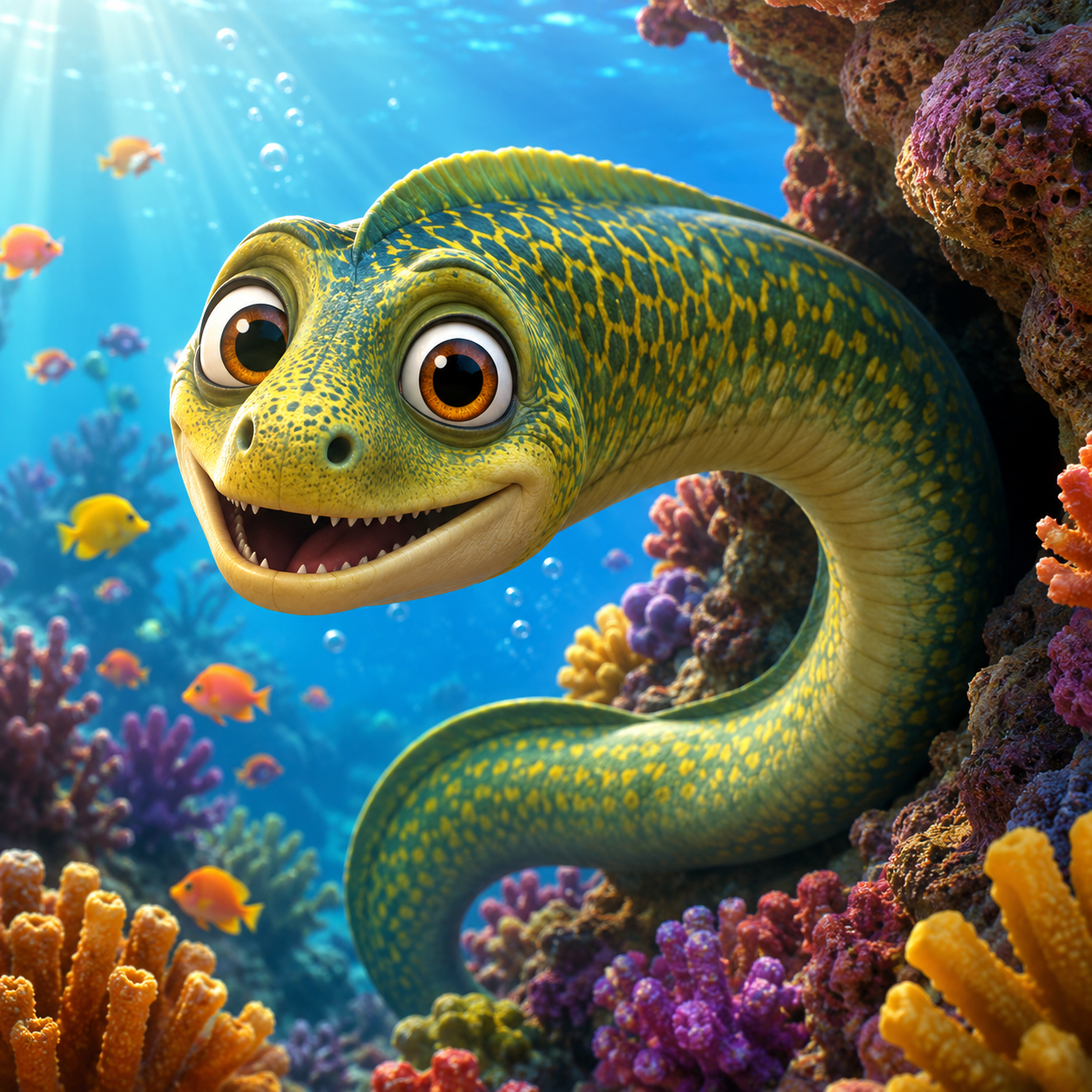
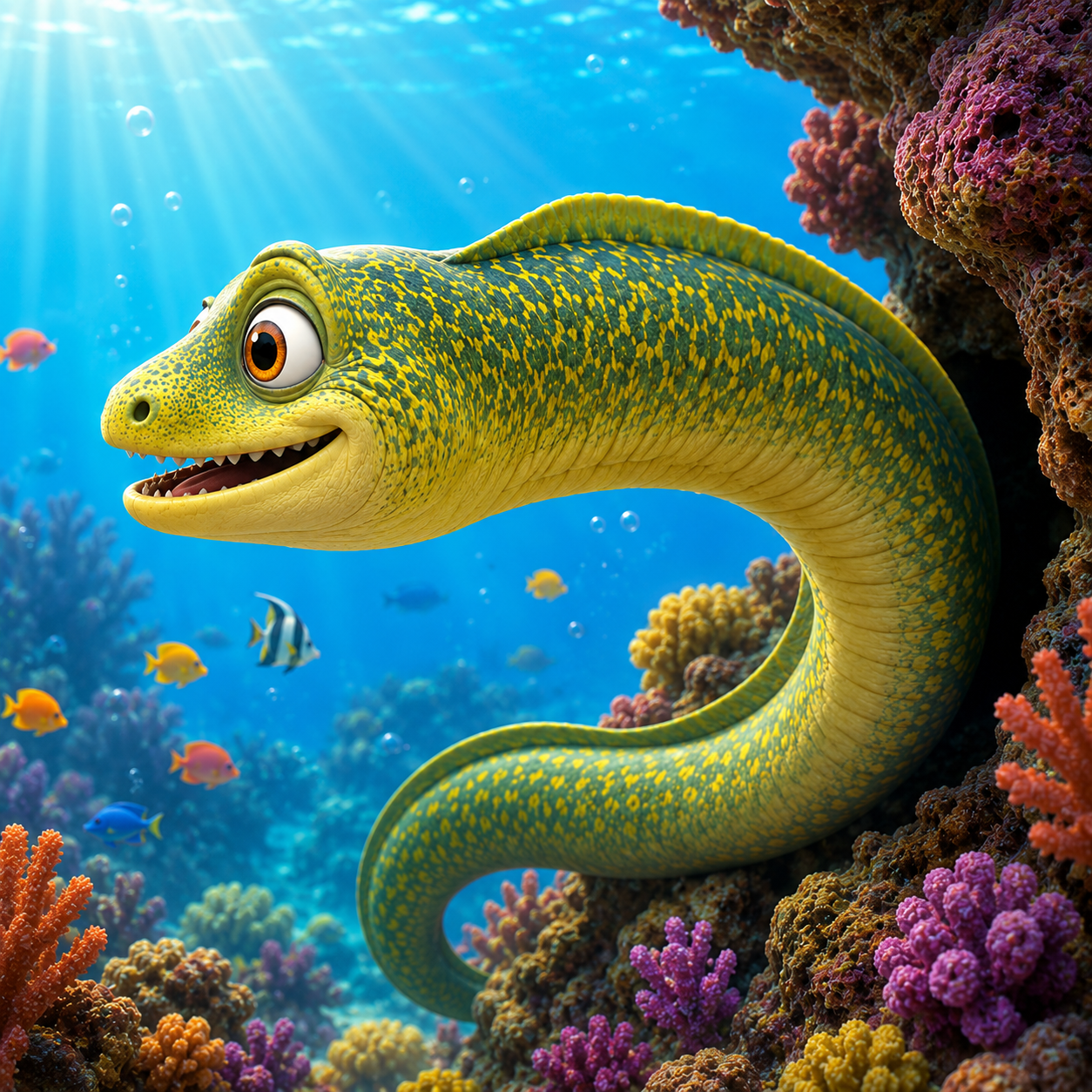
Giant Moray Eel front view Giant Moray Eel side profile
Eel

Giant Moray Eel

  • The largest moray eel species — can grow to 3 meters long and weigh 30 kg.
  • Has a second set of pharyngeal jaws inside its throat that shoots forward to pull prey inward.
  • Cooperates with grouper fish on coordinated hunting expeditions using head-shaking signals.
  • Mostly nocturnal — frequently seen resting in reef crevices during the day.
LengthUp to 3 m
WeightUp to 30 kg
HabitatCoral reef crevices
DietFish & crustaceans