ðŸĶ… Marine Life Center

Rays

Rays are flat, graceful relatives of sharks that glide through the ocean like underwater birds. From tiny guitarfish to giant mantas, they are some of the most beautiful animals on the reef.

4Species Profiled
600+Known Ray Species
7 mMax Manta Wingspan
Flat & Fascinating

The ocean's graceful gliders

Rays evolved from a shark ancestor over 200 million years ago. Their wide wing-like pectoral fins let them glide effortlessly through water. Like sharks, rays have a skeleton made of cartilage and use electroreception to find hidden prey. Many species are now threatened by fishing and habitat loss.

âœĻ Did You Know?

Manta rays have the largest brain-to-body ratio of any cold-blooded fish and may recognize themselves in mirrors.

Rays breathe through spiracles — small openings behind their eyes — so they can rest on the seafloor without burying their gills.

Eagle rays can leap completely out of the water. Scientists believe they may do it to shed parasites, communicate, or simply for fun!

ðŸĶī
Skeleton
Cartilage (like sharks)
🌎ïļ
Breathing
Spiracles & Gills
⚡
Electroreception
Yes — like sharks
📐
Body Shape
Flat & disc-like
🐟
Relatives
Closely related to sharks
⚠ïļ
Conservation
Many species threatened
Species Guide

4 rays of Tide Breaker Island

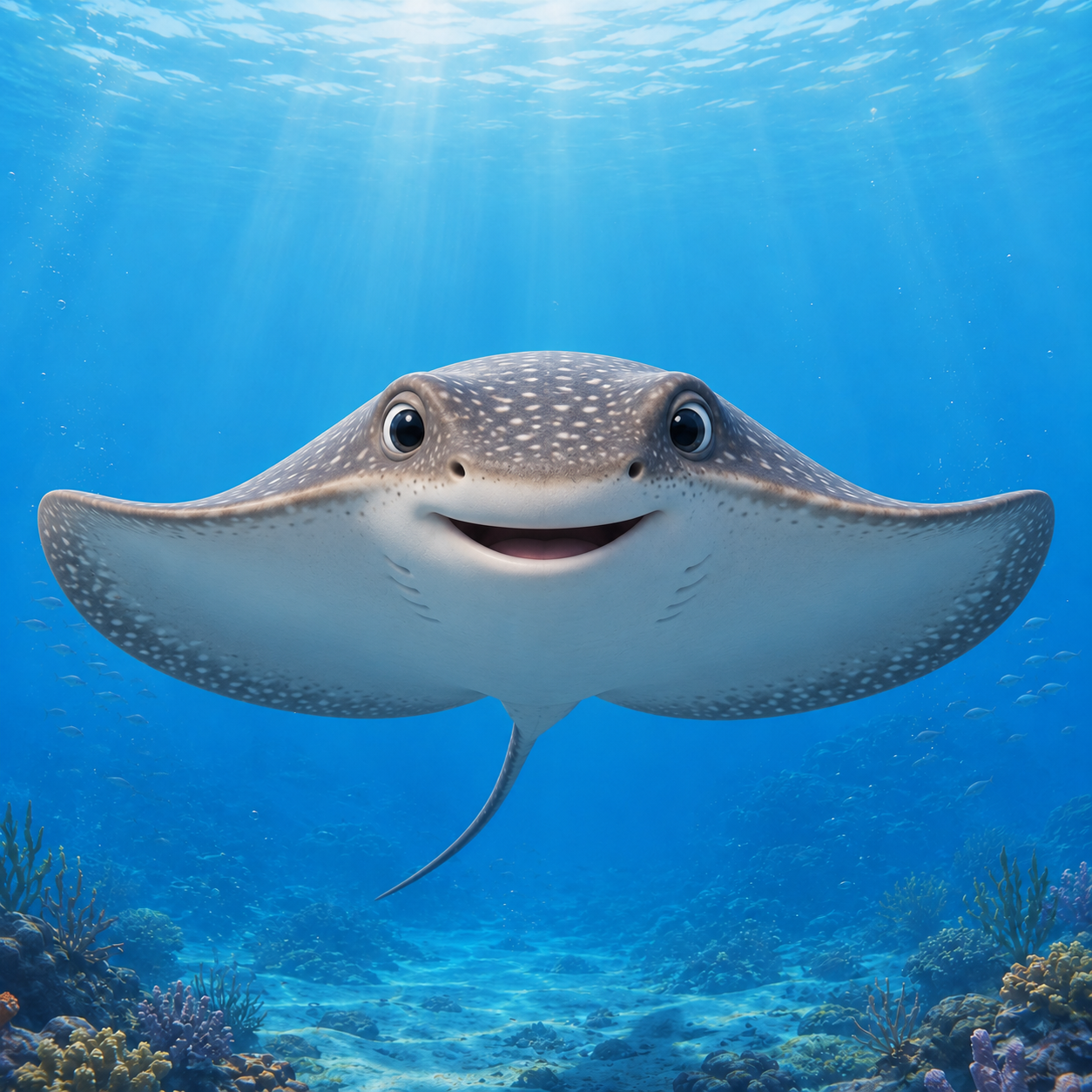
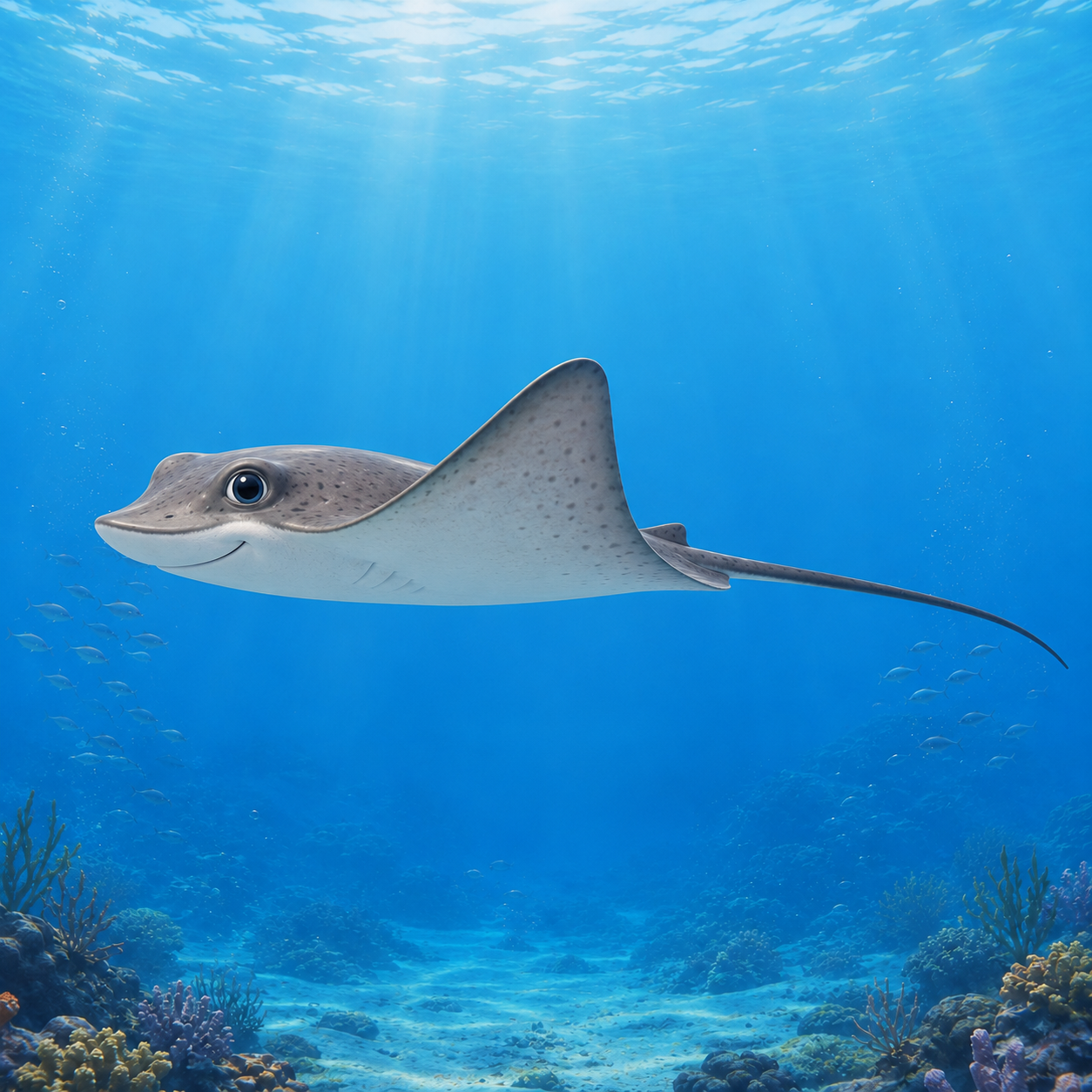
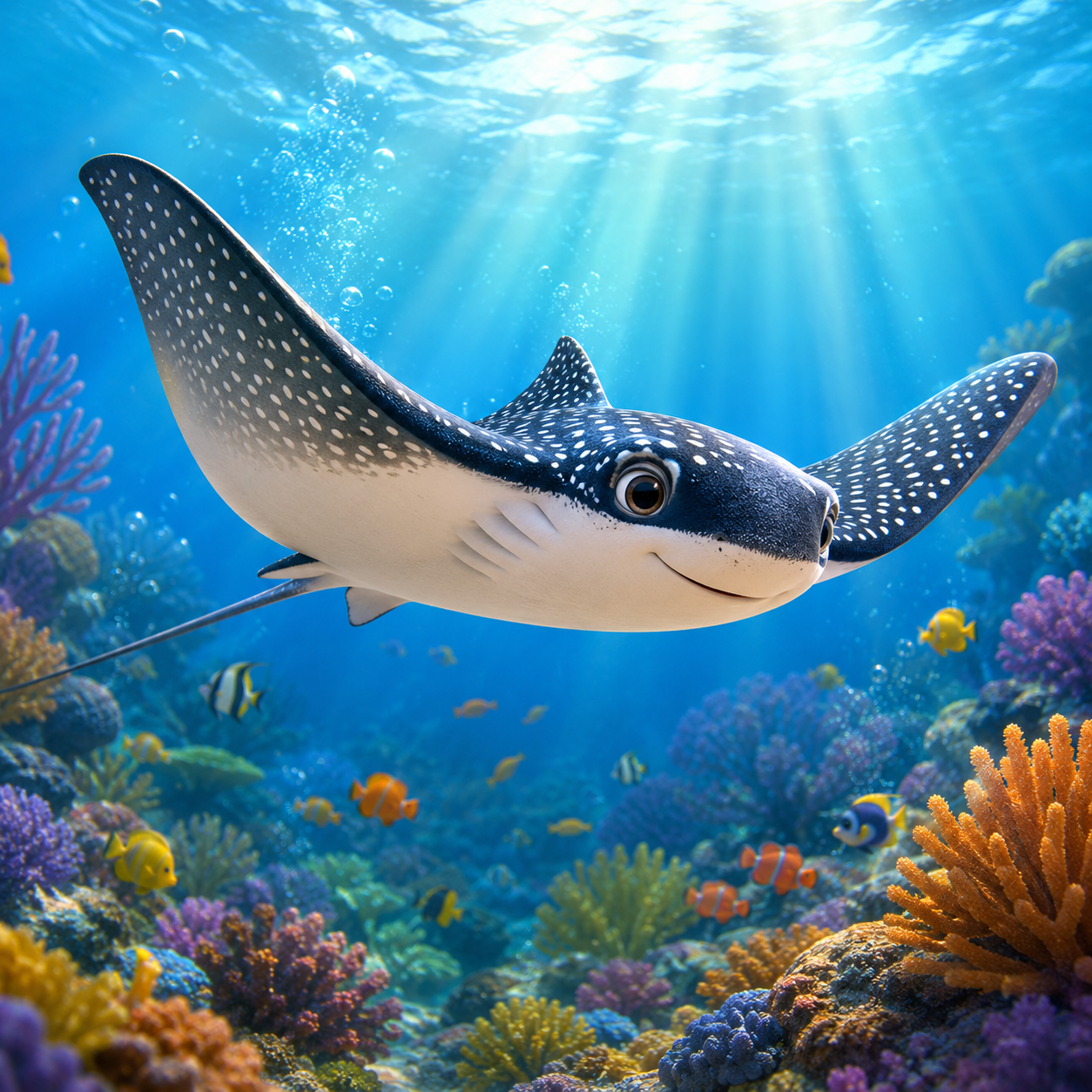
Spotted Eagle Ray front view Spotted Eagle Ray side profile
Ray

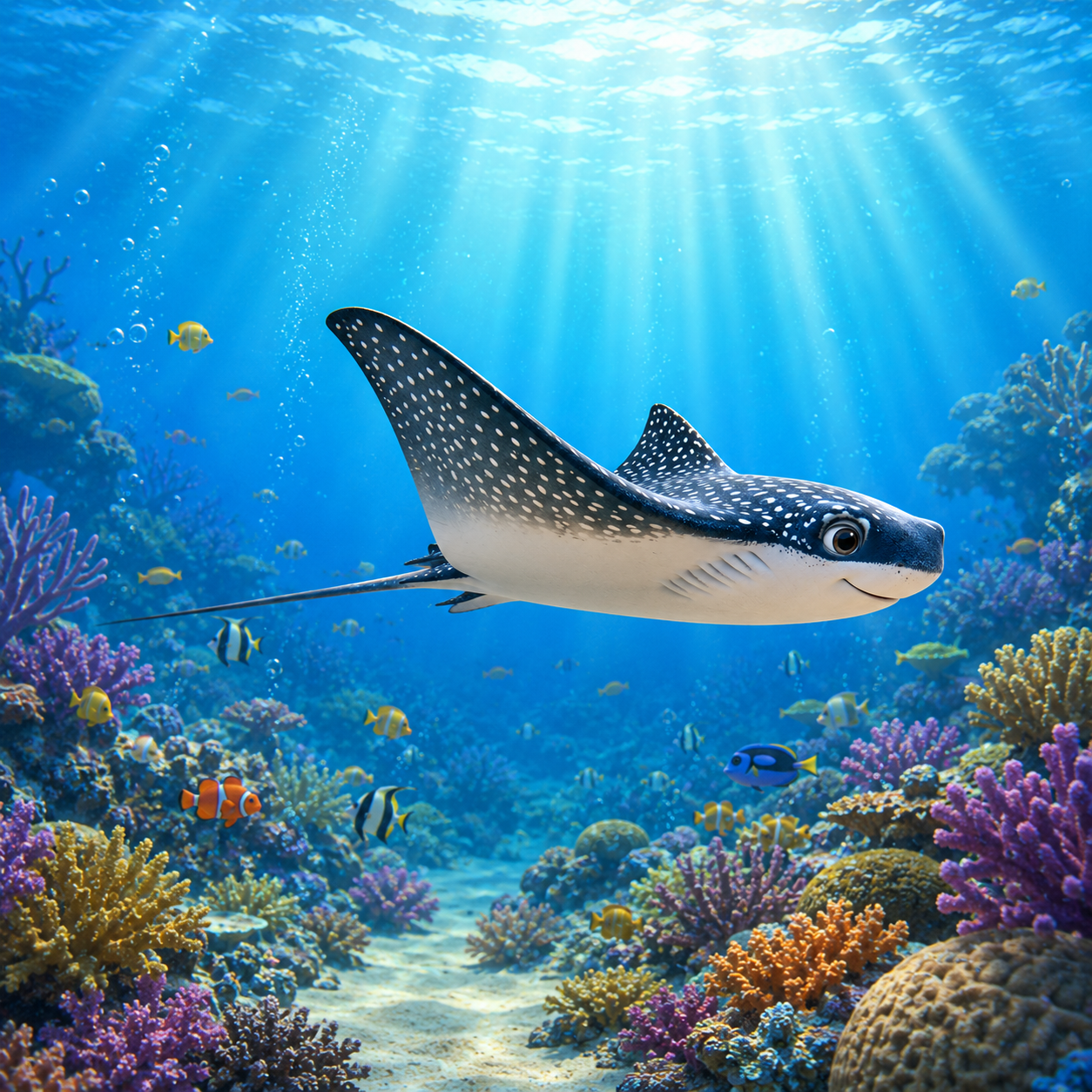
Spotted Eagle Ray

  • Covered in white spots and rings on a dark blue-grey back — one of the most striking rays on the reef.
  • Known to leap completely out of the water, possibly to remove parasites or communicate.
  • Uses its flat snout to dig mollusks and crustaceans from sandy seafloors.
  • Often swims near the surface in groups near coral reefs and open lagoons.
WingspanUp to 3 m
WeightUp to 230 kg
HabitatCoastal reefs
StatusEndangered
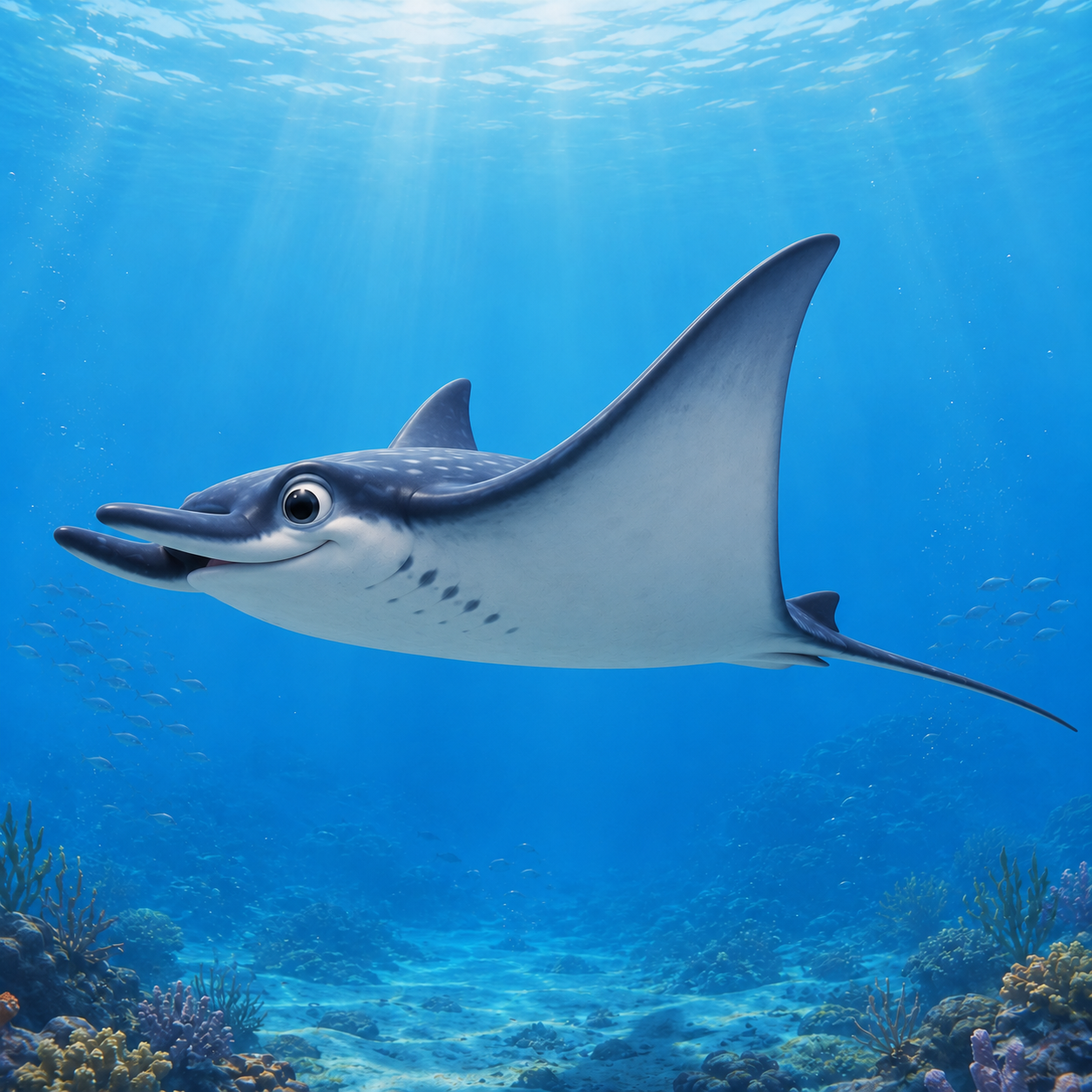
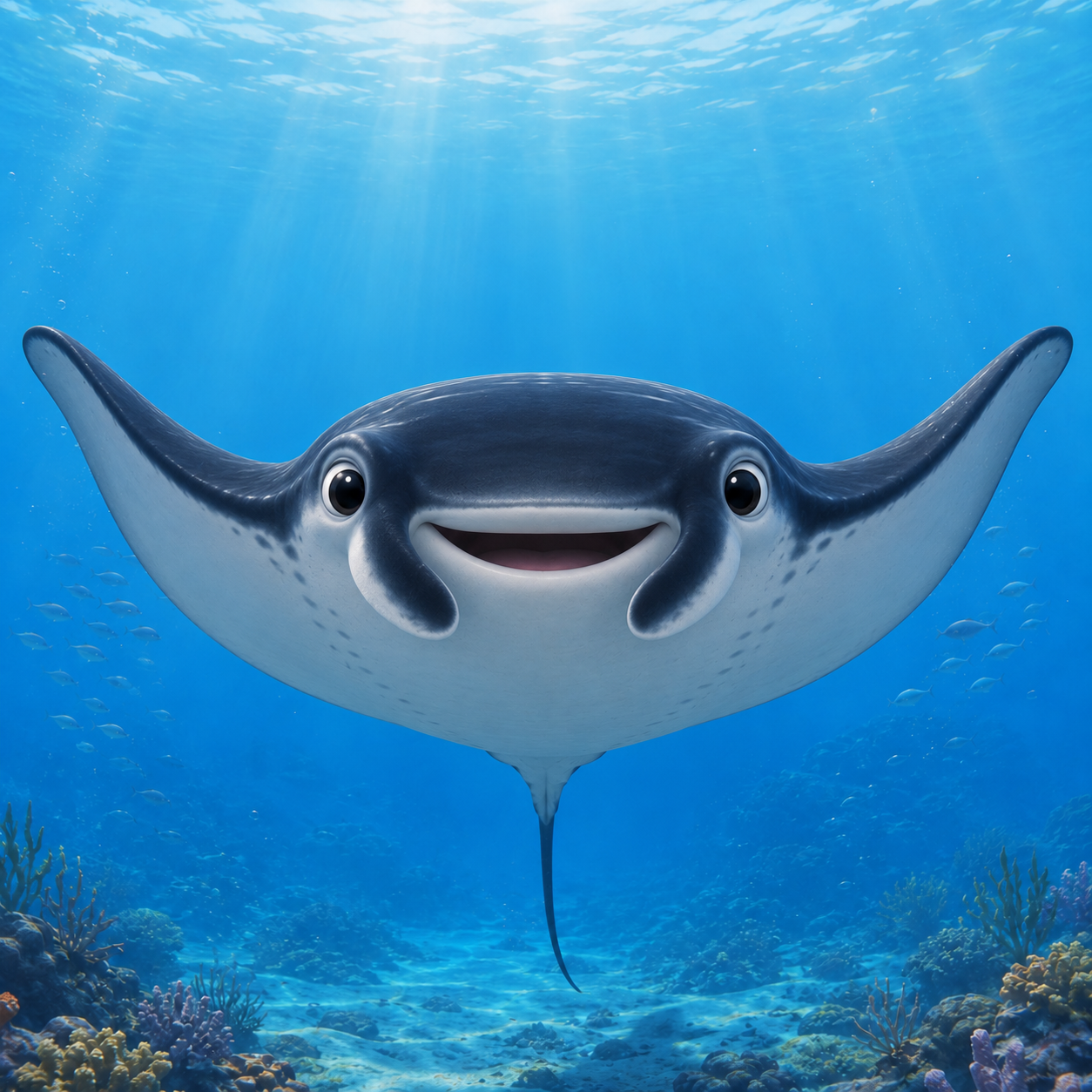
Giant Manta Ray front view Giant Manta Ray side profile
Ray

Giant Manta Ray

  • The largest ray in the ocean — some reach wingspans of 7 meters.
  • Filter feeders that eat microscopic plankton filtered through comb-like gill plates.
  • Have the largest brain-to-body ratio of any cold-blooded fish.
  • Each manta has a unique belly spot pattern like a fingerprint, used to identify individuals.
WingspanUp to 7 m
WeightUp to 1,400 kg
HabitatOpen ocean & reefs
StatusVulnerable
Southern Stingray front view Southern Stingray side profile
Ray

Southern Stingray

  • Loves to bury itself in sand with only its eyes and spiracles visible.
  • Has a venomous barbed spine on its tail used only for self-defense.
  • Peaceful toward humans — most stings happen when one is accidentally stepped on.
  • Uses electroreception to detect prey hidden beneath the sand.
WidthUp to 1.5 m
WeightUp to 97 kg
HabitatSandy lagoons
StatusNear Threatened
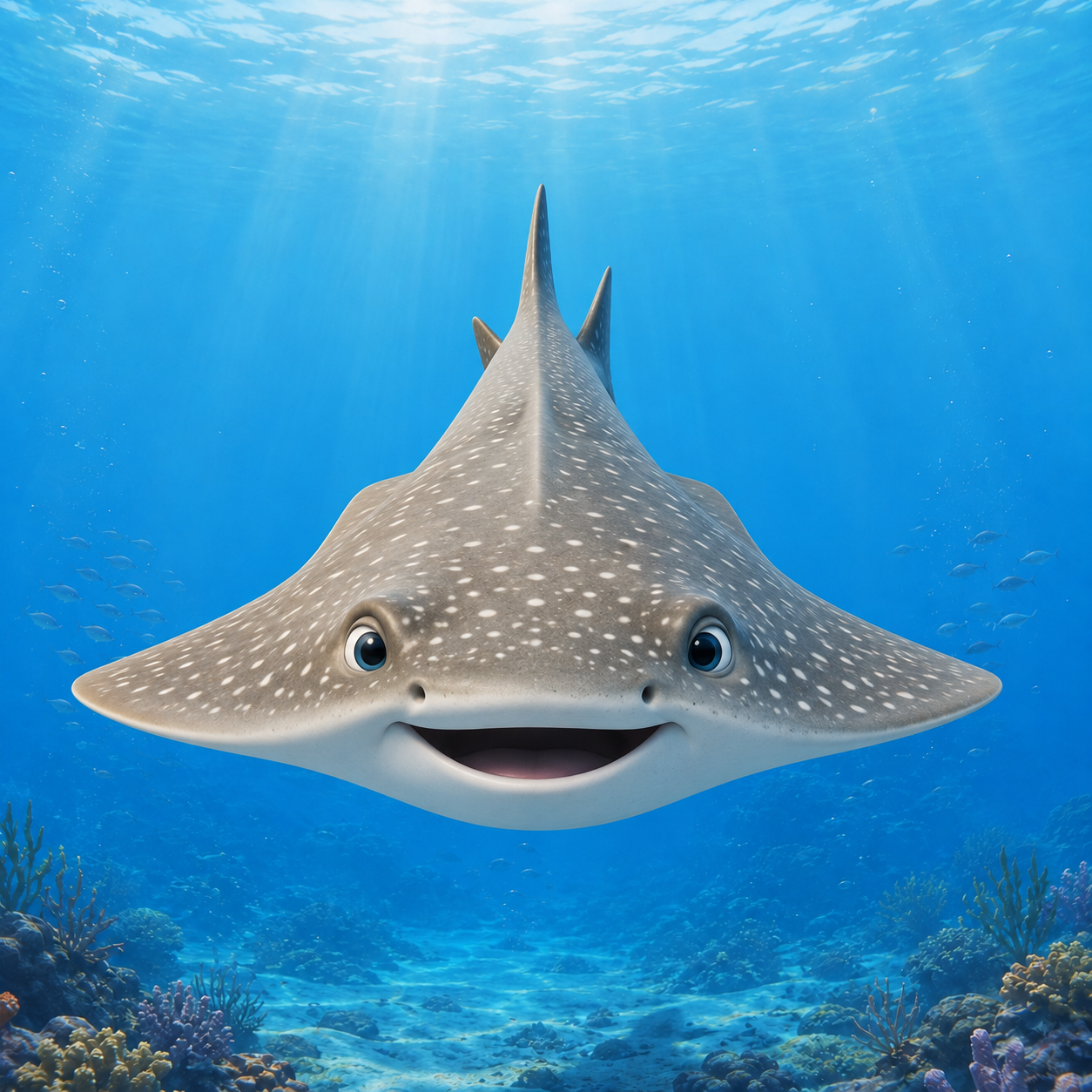
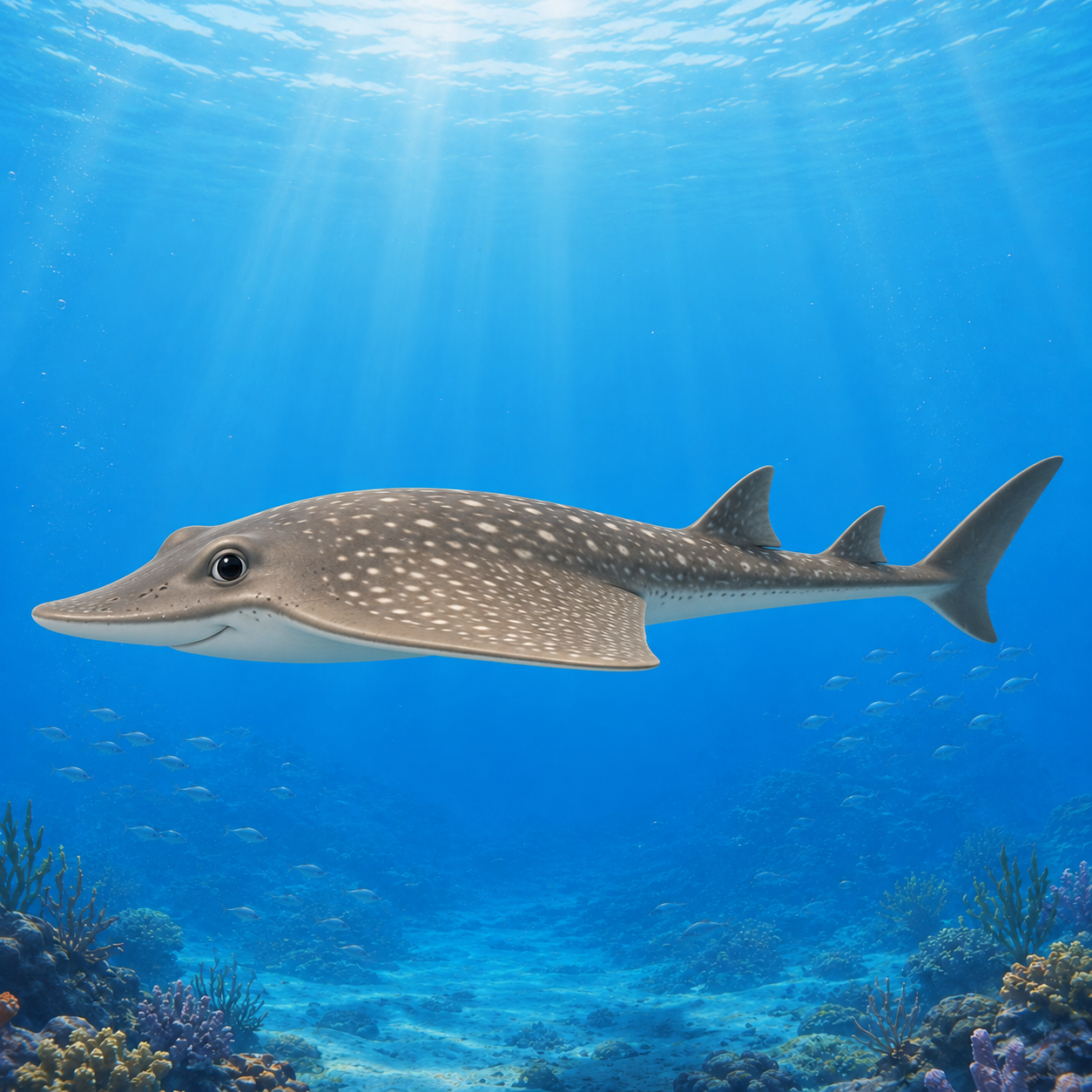
Guitarfish front view Guitarfish side profile
Ray

Guitarfish

  • A fascinating bridge between sharks and rays — shark-like tail, flat ray-like head.
  • Rests on sandy bottoms and is frequently spotted by divers in shallow reefs.
  • One of the most threatened fish families on Earth due to overfishing.
  • Named for its distinctive guitar-shaped body unlike any other ray or shark.
LengthUp to 3 m
HabitatSandy coastal areas
DietCrabs & mollusks
StatusCritically Endangered